
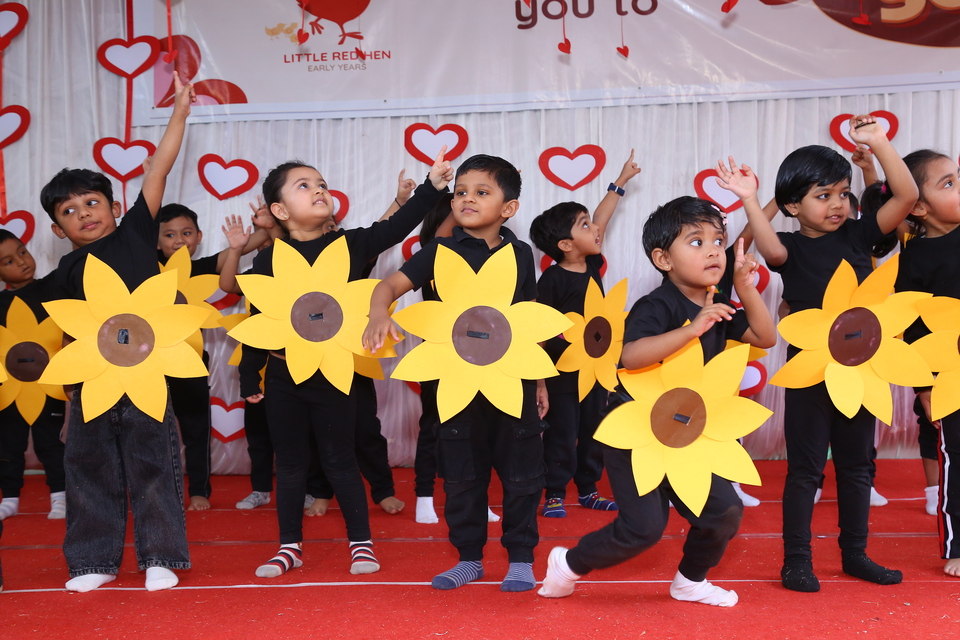
When parents begin the preschool search, one of the first questions that comes up is: Should I choose a play-based program or an academic one? Both approaches have their strengths, and often the best preschools blend the two. Think of it like The Little Red Hen’s farm — the harvest comes not only from effort and discipline but also from the joy of working together and discovering along the way. Let’s dive deeper into the approaches of Play-based vs Academic Preschools.
What is a Play-Based Preschool?
In play-based preschools, children learn by doing. The day revolves around activities like building with blocks, dressing up, painting, singing, or exploring outdoors. Teachers act as facilitators, guiding children’s curiosity instead of directing every moment.
This approach encourages creativity, problem-solving, and social skills. Children learn to negotiate roles during pretend play, collaborate in group games, and make sense of the world in hands-on ways.
What is an Academic Preschool?
Academic preschools focus more directly on structured learning. There may be set lessons around numbers, letters, phonics, or even worksheets. The idea is to prepare children early for formal schooling by introducing them to reading, writing, and math skills.
This approach can give children a head start on literacy and numeracy, which some parents feel reassured by. However, it risks being too rigid if not balanced with free exploration.
The Value of Play in Learning
Research shows that play is not the opposite of learning — it is learning. When a child is pretending to run a shop, they are working with numbers, language, and cooperation. When they build a tower, they explore balance, cause and effect, and persistence.
Play-based environments help children develop the curiosity and resilience that make academic skills easier to grasp later.
The Strength of Academic Foundations
On the other hand, gentle academic exposure helps children become familiar with the rhythms of school life. Learning to sit in a circle, listen to instructions, or practice early writing builds readiness. When approached with warmth, academic activities can give children confidence and pride in their achievements.
Why Balance Matters
The real magic happens when schools integrate both worlds. A balanced preschool ensures children enjoy the richness of play while also gaining familiarity with letters and numbers. For example, instead of worksheets, children may learn letters by tracing them in sand or discover counting through cooking activities.
This balance reflects life itself. A preschool where effort and joy go hand in hand, and where it blends discipline with imagination, structure with freedom.
Closing Thoughts
When choosing a preschool, parents don’t need to see play and academics as opposites.
Ask instead: Does this school make learning joyful? Does it help my child grow socially, emotionally, and intellectually? A preschool that answers “yes” to both is giving children the best start — a harvest worth sharing.
Leave a Reply